
Dissolving can help when hyaluronic acid filler is causing unwanted volume, lumps, swelling or an uneven appearance. It is also used in the urgent management of some filler complications. But removing filler is not always the best answer, and removing all of it is not always the aim.
Start with a complication consultation. Dr MJ will hear what has happened, examine the area and discuss what treatment could realistically achieve. You can refer yourself or be referred by your practitioner, wherever your original treatment took place.
Hyaluronidase is a prescription-only medicine containing an enzyme that breaks down hyaluronic acid, often shortened to HA.
We use it to break down HA dermal filler. It does not dissolve non-hyaluronic acid materials such as poly-L-lactic acid, or PLLA (Sculptra), calcium hydroxylapatite, or CaHA (Radiesse), or permanent fillers.
Understanding what was injected is an important part of the assessment.
Hyaluronidase breaks bonds within HA, producing smaller fragments that the body can clear. Injected hyaluronidase works locally and is short-acting, although the treatment may need repeating depending on the filler and the problem. A single injection does not necessarily remove every deposit of HA filler.
Hyaluronidase is a licensed drug. Dissolving cosmetic filler with hyaluronidase is an established off-label use in the UK: it is used for a purpose outside its licensed indications. In other areas of medicine, it helps injected medicines spread through tissues and promotes the absorption of excess fluid and blood, including haematomas or collections of blood after bruising. It has a long history of medical use and a good safety profile when prescribed appropriately and used correctly. It happens to dissolve filler, which makes it particularly useful for us in aesthetic medicine. If there is a decision to use it to dissolve your filler, Dr MJ assesses its suitability and explains the benefits, alternatives and risks before asking for your consent for treatment.
The preparation we use is animal-derived, as are many preparations used in the UK and Europe. If you are vegetarian or vegan, or have ethical or religious objections to animal-derived medicines, please tell us during your consultation. You may decide this treatment is not acceptable to you. Hyaluronidase is the established injectable medicine for dissolving HA filler; there is no equivalent alternative dissolving drug. We can discuss what this means for your management plan.
When HA filler compromises the blood supply to skin, prompt hyaluronidase treatment aims to restore circulation and limit tissue damage.
This is an urgent complication. Dr MJ accepts both patient self-referrals and practitioner referrals for vascular adverse events.
Treatment may involve several injections across the affected area and repeated assessment or further doses.
If you believe you have an urgent complication, please do not delay getting in touch and call the practice immediately on 0151 236 5166.
Both approaches have a place. The right choice depends on the problem, the area being treated and the size and position of the filler deposits.
Dr MJ uses examination, the feel of the tissues and her knowledge of the anatomy to decide where to inject. This can be appropriate when filler is spread through an area in many small deposits, rather than collected in one clearly identifiable lump.
In the lips, for example, Dr MJ often starts without ultrasound guidance because the deposits can be very small and widely distributed. If discrete deposits remain afterwards and can be identified on ultrasound, these may then be treated under guidance. An unguided injection is still a carefully planned treatment and has good success rates in appropriately selected cases.
During guided treatment, Dr MJ watches the needle and an identifiable filler deposit on the live ultrasound image as she injects. This helps her deliver hyaluronidase into the deposit. It can be useful for a particular lump, a deeper collection or filler remaining after previous dissolving.
Ultrasound cannot show every piece of filler. Very small deposits may be too small to see, and not seeing them does not mean they are absent. Guidance helps us target what is visible; it does not guarantee complete removal or a particular cosmetic result.
The aim may be to reduce a troublesome deposit, remove excess volume or dissolve more widely. Treatment can be staged, with reassessment before deciding whether to do more.
The plan is based on the benefit we expect, rather than an assumption that every trace of filler must go.
Dr MJ has treated thousands of complications and has extensive experience of what happens after dissolving. She takes a pragmatic approach: sometimes she will advise leaving filler alone because removing it could make the appearance worse. Consultation and examination are essential to that decision. Ultrasound is used when it adds useful information.
Contact Dr MJYes. Filler that is causing a problem may sit alongside filler that is still improving the appearance. Removing both can reduce puffiness while also taking away helpful volume and support. Hollows, under-eye bags, creasing or loose skin may become more obvious.
This matters particularly with longstanding issues such as tear trough problems. The filler and the complication may have affected the tissues over several years, and some changes can persist after the filler is treated. Your face has also aged during that time. Dissolving cannot reverse that ageing or promise a return to your pre-filler appearance.
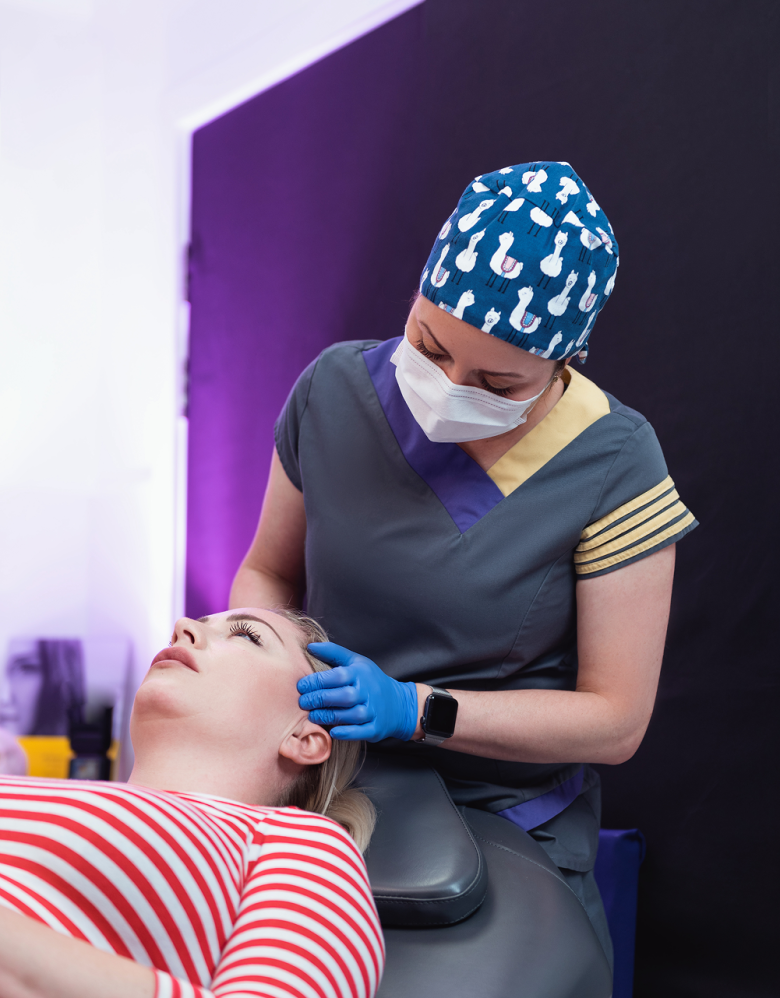
Injections can cause bruising, swelling, soreness, bleeding and temporary redness. Swelling can be pronounced around the eyes or when several areas are treated. Hyaluronidase is an irritant and can cause local reactions. There is also a risk of injury to nearby structures from the injection. In very rare cases, severe allergic reactions such as anaphylaxis can occur.
Hyaluronidase also temporarily reduces the naturally occurring HA in the tissues around the injection. Natural HA turns over rapidly and is expected to replenish promptly, typically within 24 to 48 hours. This is an estimate, not a guarantee of when swelling will settle or your appearance will stabilise. It is not known to cause permanent depletion of your natural HA. This temporary effect is different from losing the volume provided by injected filler, which can leave a lasting change in appearance. Hyaluronidase has a good safety profile when used appropriately. Dr MJ will review your medical history and discuss the risks of the procedure with you.
Dissolving can be incomplete or uneven, and more than one appointment may be needed. Symptoms may persist if filler is only part of the problem. A lump, redness or swelling may require other management, particularly if infection or inflammation is involved. Further dissolving should follow reassessment.
You may have heard that you need a “patch test” before having filler dissolved. Let’s clarify what that means. The test commonly offered is actually not a “patch test” but an intradermal test: the medicine goes into the skin, not onto it. The British Society for Allergy and Clinical Immunology (BSACI) advises against using skin tests to screen for drug allergy without a clinical history suggesting an allergic reaction. So, injectors are generally performing this test against BSACI guidance.
Routine hyaluronidase testing in aesthetic clinics has no universally validated, standardised test concentration, and results can be misinterpreted. Hyaluronidase is also an irritant, so local redness or swelling can be mistaken for allergy, giving a false-positive result and causing unnecessary worry. Local irritation is not, by itself, anaphylaxis. Testing also exposes you to the medicine and carries its own risks, including an allergic reaction and possible sensitisation.
I do not routinely perform intradermal testing to hyaluronidase before dissolving filler. Anaphylaxis from hyaluronidase used to dissolve filler is exceptionally rare, and I have treated hundreds, if not thousands, of patients with it without encountering a case. That experience supports my confidence in the medicine, but it does not mean the risk is zero. I take a full medical and allergy history, assess your suitability and arrange specialist allergy assessment where the history warrants it.
Dr MJ will review your treatment history, medical conditions, medicines and allergies. Tell us if you are pregnant or breastfeeding. Before planned treatment, you will have time to discuss the proposed approach, ask questions and give informed consent.
The enzyme is delivered by injections into the area being treated, with ultrasound guidance where appropriate. You may feel stinging or discomfort. The number and distribution of injections depend on your assessment; emergency treatment can require a different approach from elective dissolving.
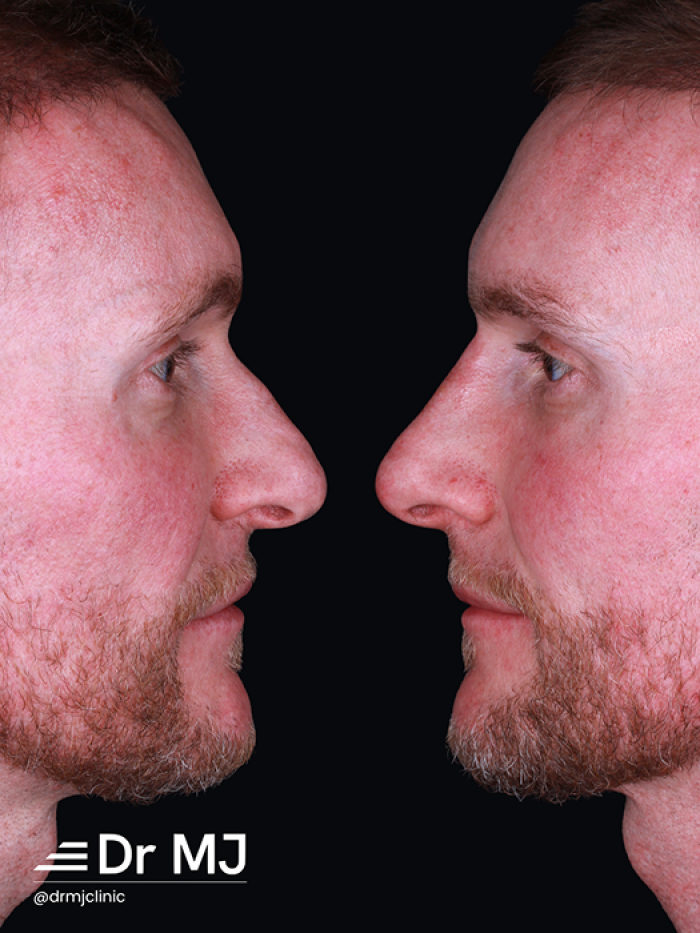
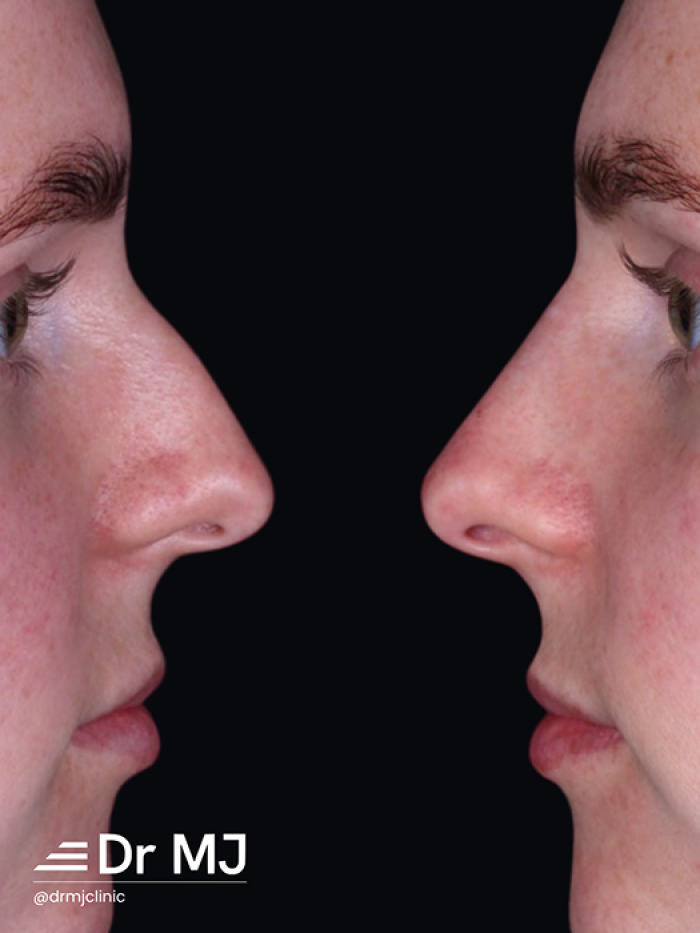

You will receive aftercare advice and a plan for review. Early swelling can make the result difficult to judge, so decisions about further treatment are made after reassessment.
If a remaining concern is caused by tissue changes or anatomy rather than removable filler, repeated dissolving may not help.
Contact Dr MJWe welcome anyone who needs help, without judgement, and accept patient and practitioner referrals. If you live far away, an online consultation is a useful first step to discuss your concerns before travelling for examination or treatment. For an urgent complication, including a suspected vascular adverse event, contact our team immediately and explain that it is urgent.
Need help choosing an appointment?
Call 0151 236 5166 or email reception@drmj.com. Follow @drmjclinic
Our team has helped many patients like you and will guide you towards the most appropriate booking. Your treatment plan and fees will be explained before you proceed.